
Ngā Tāngata o Te Hiku o Te Ika
This is where we celebrate the people of Te Hiku o te Ika – the Far North. From kaumātua to community champions, storytellers to shearers, these are the stories that make our place what it is.
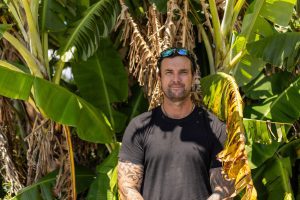
I’m an Awanui boy through and through — born and raised. My childhood and most of my teenage years were spent around Awanui, Ngāi Takoto country, where I still have really strong whānau ties today. We whakapapa to Te Aupōuri, Te Rarawa and Ngāti Kahu, my mid-90-year-old godmother, Myra Berghan, still lives on Kumi Road where I grew up. That place will always be home.
It was just me and my mum growing up, and watching how hard she worked to support us gave me the drive to carry that same work ethic. She also taught me to treat people how you’d want to be treated — something that’s stayed with me ever since.
Most people know me as Fish, good or bad. It’s a nickname that stuck early on, and now it’s so well known that a lot of people think it’s actually my real name. In a place like the Far North, your reputation matters more than your name anyway. Up here, reputation is everything. If we didn’t have a good one, we wouldn’t have made it twenty years in business.
My wife Alex and I started the electrical business when we were still really young, with two toddlers and a baby at home. It was tough, but that pressure became fuel. I had to provide for my whānau, and they’re still my biggest driver today. My grandfather, Darby Jones, played a huge role in shaping who I am — he’s actually tattooed on my forearm, so whenever I need a reminder of who I am and why I do this, he’s right there.
He’s since passed, but his influence is still with me every day. My original boss, Kev Cowie from Brents Electrical, gave me my start in the trade. He’s also passed, but I’ve never forgotten where that journey began. My mum also played a massive role, and I’ve been fortunate to have some incredible male and female mentors and role models throughout my life who helped guide me along the way.
We chose to stay in Te Hiku for our kids and now our Mokos. This place is home for us.
Running a trade business in a small community isn’t always a straight road. People are watching their pennies more these days, and balancing expectations while still delivering quality can be a challenge. I’ve always believed in bringing young people through the trade properly. We’ve taken on apprentices from early on and also had students come through during the year from the Gateway programme at Kaitaia College. Seeing our apprentices grow into capable tradesmen with strong work values has been one of the most rewarding parts of the journey. We’re still a whānau-based business, with me, Alex and our daughter Brenna at the front, and our staff are a big part of that too. I’m incredibly grateful for our staff and the long list of loyal customers who have backed us for two decades. We don’t take that for granted. I never imagined I’d be in a position to sponsor teams and events, but I remember being that kid who needed support to get to sports tournaments. Over the years we’ve been lucky enough to sponsor different things across Te Hiku, from soccer to rugby, sports academies and rodeos. It’s just our way of giving back.
Reflecting on twenty years in business, you realise how much this place shapes you — the good and the hard. Like the new name says, we are Far North. Before Kinetic, we traded as Fish Jones Electrical for fourteen years, so this journey has always been here in the Far North. Changing to Far North Electrical is about representing the place and people who have supported us from the start — it reflects our identity. The name just reflects who we are and where we come from.
I try my best. I’d love to be able to do it all for everyone, but that’s not always possible. I don’t know how everyone else does things, but whether it’s good or bad, I’d rather front up and face it. That’s just how I’m wired — I’d rather show up myself. At the end of the day, you can’t please everyone, and I’m by no means perfect. But we’re still here twenty years later, and I don’t take that lightly.
If I could say anything to someone thinking about starting out, it would be this — if you don’t go, you don’t know. Business has its challenges, but you learn a lot along the way.
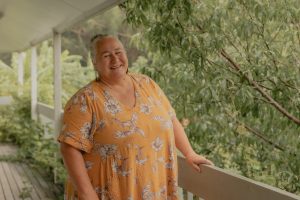
My whānau Māori whakapapa from my Mum connects me to Te Hiku. My iwi are Te Rarawa, Te Aupouri, Ngāti Whātua ki Kaipara, and Te Uri o Hau. My grandfather was Croatian and my father is English. This mixed heritage made life challenging in the 1960s and 70s – housing, education etc. We had no TV; we grew most of the food we ate, and Mum made our clothes. I learned that through adversity comes opportunity, and for me, that opportunity is always found in learning.
Our lifestyle during my childhood, built character. In 1975, when I was nine, I won the spelling bee at my 5th primary school, and they couldn’t believe that this pōhara Māori girl did that. But the best thing was the prize was a dictionary thesaurus, which opened a world of language and sparked my inner nerd.
Fast forward to 1985, when my parents were still living on the breadline, and on a whim with some inheritance money they bought the White Lady Pie Cart from Brian Washer. They asked me to come home for Easter and help them, and here I am still in the Far North 42 years later. After working in the pie cart for a while, my dad told me I should be working with people, I said to him ‘What do you mean? I am working with people!’, and he said ‘No, no – like a counsellor or something’. I was interacting with so many different people, some of them at their worst; 2 o’clock in the morning after a big night at the pub, blurting their whole life out to me. It was where I learned a lot of my social work skills. People would literally hand me their wallets and say ‘Take the money out’, there was a lot of trust in us. We would stop a lot of people from drink driving too, even dropped people home. I think we probably saved a lot of lives.
I took his advice and started working in the community, first with Homebased Whānau Support, then I was the inaugural coordinator of Kaitaia Community House, and have worked across many iwi, government, community sectors, and then in education spaces for the last 22 years.
I think what’s most surprised me about my career is learning to public speak. 20-year-old Jaqi was quite shy, and lacked confidence, but my Mum saw my potential and made me her delegate on our marae trust. Additionally, my mentors Gloria Herbert, taught me how to speak in public and Robin Shepherd nurtured my governance and leadership potential. He always pushed me to be better – subtly challenging things in a way that made me think. He was an amazing teacher.
I might not have degrees on paper, but I definitely have a QBE – Qualified By Experience. I’m well-read, mostly self-educated and I’m proud of that. I have this curiosity that never really switches off and live in a space of possibility, and believe that what we know is just a tiny dot in a massive circle of what there is to know. The rest of that circle? That’s where the possibility lives. That curiosity helped me raise my extended whānau. Growing up, I wanted to be that ‘no kids - cool aunty’, then at 29 when I had my first baby, and my husband went away for 6 weeks, I had to learn real quick about raising a child and loved being a Mum. One of my favourite sayings – work smarter, not harder and to have a plan. Whānau are the key and education is the door. When education is at the forefront of your whānau decisions, you will transform their lives.
Raising extended whānau tamariki – whāngai, as well as my own 2 has been a privilege and a challenge. One of my sisters took her own life, another passed from an accidental drug overdose and one has mental health issues, but their kids are amazing and talented and somehow we managed to grow some great people. Helping them see their own worth is all about making them feel loved, accepted and respected. Encouraging them to grow their strengths, giving them experiences that open their minds.
When I see someone who I have helped, become the person I knew they could be, it gives me great satisfaction. I turn sixty this year and have decided that I am taking some time out for Jaqi Brown and am resigning from most of my volunteer roles. I need to make some lifestyle changes. These last school holidays, I spent two weeks with my mokopuna. Just me & them and I loved it, it was awesome! But I found I couldn’t do things I wanted to do with them, I just felt tired all the time and it made me reflect on what is the most important thing in my life? It’s my grandchildren, but it’s also my health and wellbeing. So, my step back is centred around ‘renovating’ my health and reducing stress is a part of that. My sixties are going to be all about things that bring me joy and fill my cup - it’s going to look like getting healthy, and maybe even getting wealthy!
This is a huge step for me, I have always been involved in the community or a trustee on a board for 40 years, giving a part of me to everybody else. So now, I want to give back to Jaqi Brown. I need to step back to step up. I want to learn more about how to say NO and see what that opens up for me, because I’ve been such a yes-person my whole life. I think I’m going to come back from this break better and stronger; this is not the end of my community mahi.”
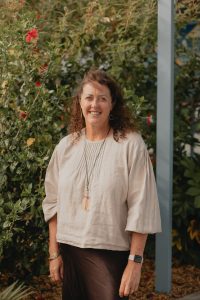
I am Kaitaia-born and bred, a local through and through. My childhood home was on the Awanui Straight, and my school years were spent right here, progressing through Kaitaia Primary, Kaitaia Intermediate, and Kaitaia College. My upbringing was a happy one. With just one younger sister, our life was simple, supported by two working parents. We never went without the basics, even if Mum had to be handy with a sewing machine to make our clothes. Our brightest memories are the classic Far North summers: days at the beach, and the excitement of trips down to Whangarei and Auckland to visit family.
My parents were old-fashioned in the best sense, instilling a strong work ethic. It was drummed into us to work hard, be honest, and help others less fortunate. These values, I think, are the engine behind my community involvement today. Dad's advice for our first part-time jobs was always, "make sure you're there 15 minutes before you start." Being on time wasn't just a rule; it was a character trait. Loyalty, punctuality, honesty, and trustworthiness became engrained in who I am.
I didn't leave Kaitaia until I headed south for university in Hamilton, where I completed my Bachelor of Management Studies with first-class honours. After a couple of years working in Auckland, my husband Lance and I made the deliberate choice to return to Kaitaia when our son was two. The Far North beckoned us home.
My career path has been anything but linear, fuelled by a personality that thrives on variety, challenge, and change. It began with an unexpected call: teaching strategic management at Kaitaia College. Though unqualified at the time, this led me to complete my teaching diploma through Auckland College of Education.
A significant chapter was our three-year move to the Cook Islands, after I secured a job at the Ministry of Education in Rarotonga while working as Deputy Principal at Abundant Life School. We had three months to pack up our family—it was genuinely the best three years of our life.
When our eldest daughter neared NCEA level, we moved back to New Zealand, settling in Whakatāne, where I became Deputy Principal of Trident High School. Whakatāne felt like home, and I thought we would be there forever. However, family needs called us back to Te Hiku when my father-in-law became unwell, and we've been back ever since.
Upon returning, jobs were scarce, so I took a different path: buying a florist and gift shop. The joy of working with flowers and beautiful things was incredible, but retail is a tough, tough industry. I worked more hours in that role than any other. Seriously, hats off to everyone in retail!
My next role, the Te Hiku Revitalisation Project, was amazing but came with significant challenges. The key lesson I learned was that you can't please everyone all the time. The energy and time consumed by a vocal, unhappy minority was immense, and some of the interactions were incredibly hurtful. In a period that included COVID, the project, and working in toxic environments, the five years from 2020 were arguably the toughest of my career. The silver lining was the huge connection and collaboration with Te Hiku as a whole. Seeing our communities come together in that time was an awesome thing.
Today, I feel like I am in my element at Ahipara School, combining my management and business skills with my teaching experience. Every day, every hour, is different, and while that is a challenge, it is also what I love.
Despite everything, it is my favourite role I’ve ever been in, and I am grateful for it. What I love most is working with our young people and my brilliant team here. I fundamentally believe everyone achieves more in a team, drawing on each other's strengths. My varied career has kept me learning and appreciating the diversity of people.
Te Hiku truly is a special place. The people in our community are so friendly and happy compared to others. This is home. With elderly parents and our children and grandchildren here, Lance and I feel very settled in this chapter of our lives.
This year, I've been on a health and well-being journey that has made a massive difference to my ability to do everything else. I love the Te Whare Tapa Whā model—when my social, emotional, physical, or mental well-being pou (pillars) are out of balance, everything suffers.
A huge mind shift for me has been around purposeful play in education. I used to think it was just a time filler, but when planned purposefully, it is vital for coordination, left-right brain development, creativity, and speech—especially important for a generation spending so much time on devices. It makes a significant difference, especially for new entrants transitioning to school.
What fills my cup and brings me joy is simple but important: my children and my grandchildren. My mental health and "me-time" involves a daily walk on the beach, come rain, hail, wind, or sunshine, before my day begins. And then, in the weekends, just hanging out with friends and family.
If I could go back and speak to my teenage self, I would tell her: Don't worry about what others think. I was shy and worried constantly, which led to many missed opportunities. Now, I understand there's no need to constantly try to prove myself. Take every opportunity and live life to the fullest, because life is short. I just want a life that is full and happy, and I am grateful for every day I’m earthside.
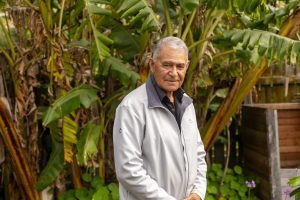
My full name is John Hepa Makimou Paitai. I was raised in Ahipara by my Aunty Meremere Paitai-Petricevich and grandparents Jack / Tirionu (Mangaia and Rarotonga) and Edith Paitai. My birth mother, Rangirangi Paitai-Paratene, passed away when I was seven, and so we came home from the city. My grandparents and aunty became the centre of my universe. That’s where the core values and lessons of my life stem from — the unconditional love and whanaungatanga they showed, not only to me and my three sisters Freda, Daniella and Fiona, but to our wider whānau.
On our marae, I observed elders who gave substance to the dying words of our paramount chief Poroa: “Kia ū ki te whakapono, me aroha tētahi ki tētahi” — “Hold fast to your faith and love one another.” The importance of being humble, respectful, and doing unto others as you would have them do unto you was ingrained in us from childhood. Above all, we learned the significance of wairua — the very essence of who I am emanates from my wairua connection to te taiao.
I tatai to all five iwi of Te Hiku o Te Ika. I am grounded here through my tūpuna, my maunga, awa, moana, marae, wāhi tapu, waka, whānau, hapū, and iwi who lie in those sacred places from Whangape to Kapowairua, from Ahipara to Whatuwhiwhi. It has always been my destiny as the only son and grandson in the Paitai whānau to return one day to be the keeper of the home fires.
I was lucky to have grown up in a time when elders — steeped in traditional knowledge and practices — were still around. My interactions with them shaped me. Families didn’t have much; some were as poor as church mice, but you could eat off the floor of their house. I remember one aunty who had a dirt floor, yet it was spotless. She would fill a steel basin with embers from the fire to keep us warm at night and keep mosquitoes away. Those memories stay with me, especially waking up reeking of smoke.
Growing up outdoors gave me the grounding that kept me fit and healthy for the world out there. Nowadays, I love walking barefoot along the beach and in the surf to recharge and ground myself.
I went to Kaitaia College and thirty years later returned there as Deputy Principal. The late William Tailby and I had shared the same form class, Trigg 5, and played together in the First XV. After crossing paths with him during a principals’ course in Auckland, I began considering returning north. Around that time my stepfather Sonny Petricevich passed, and I’d promised my mother that if the right job came up, I’d come home.
Blow me down, a Deputy Principal vacancy was advertised. I applied, was shortlisted, and following my interview, was offered the position. At my pōwhiri I felt blessed — I knew I was in the right place at the right time. I wanted to make a difference at the school that had given me the skills and confidence to forge my way in the world.
Coming home to the North with my wife, Mareea, who has been my rock and soulmate, was a full-circle moment. I had spent time in her hometown of Waitara in Taranaki; now it was her turn to come to mine. Those years at Kaitaia College were special. Elsie Matich provided gender balance and experience to our leadership team. Together we made a difference and shared many hilarious and serious moments, always working as a team.
As an educator, I learned that change is constant. If you’re a teacher who can’t accept change as the norm, you’re in the wrong job. Adaptability is a life skill our students must learn.
The institution of the marae I experienced in my formative years is vastly different from what my mokopuna experience today. Although the marae remains central for transmitting traditional knowledge, it’s challenged by rapid social change. The urbanisation of Māori in the 1950s began decades of separation from the sanctity of the marae, and the digital age has magnified those challenges.
Thankfully, there’s a renaissance happening — led by kaumātua, kuia, and young educated Māori. Wānanga of te reo, tikanga, and hītori are reconnecting our youth to what I call the University of the Marae. It’s incumbent upon trustees to embrace our youth, who are the digital natives among us, and create opportunities for passing on knowledge within the sacred walls of our whare tupuna.
I believe there is no substitute for experience. In retirement I serve as chairman of our marae, urupā, Parengarenga, Ahipara, Peria, Māori Anglican Pariha, and as trustee, committee member, kaumātua, and kai karakia on local, regional and national organisations — not because I have to, but because I choose to. At the end of this year, I will step down as the Māori representative on Waipapa Taumata Rau, the Auckland University Council, a role I’ve held since retiring five years ago. Having served as a Primary and Secondary Principal, it’s been rewarding contributing to the administration of our leading university.
Nowadays I keep active by mowing the church, marae and family lawns. I’m a keen fisherman and a member of the Ahipara Big Game Fishing Club. I loved scuba diving and was the hunter-gatherer for our whānau. Today, I skipper the boat and follow my son-in-law Raymon’s bubbles while he gathers kai from Tangaroa. I played rugby, coached and refereed to Senior A level — now I’m an avid spectator of all sports.
Not many people know about my years as a leathered-up bikie. I rode with the Ulysses Club, whose motto is “Grow old disgracefully.” Much to Mum’s delight, I retired myself from the bikes, never having had an accident in over twenty years of riding. I’ve also driven coaches for years — it never felt like work. Touring, sharing the history and beauty of the Far North was pure joy. Recently I’ve been reacquainting myself with my guitar and ukulele for relaxation. When I shed some responsibilities, I’d like to write about my grandfather (Mita Paratene), who served in the Pioneer Māori Battalion, surviving Gallipoli, the Somme and Passchendaele, returning to Ahipara with an English Rose — my grandmother Edith Waite.
As a pāpā, koro, and husband, I’ve learnt not to try and please everyone. Life can be cruel, but it can also be incredible. Most importantly, whānau is everything. I gain much satisfaction from supporting our three children and 11 mokopuna to reach for the stars — it makes me incredibly proud to see them achieve.
Looking back, if I could speak to my younger self, I’d say: “Look after your health, have heaps of fun, travel the world and do the things you’ve always wanted to do,” — because there’s nothing worse than looking back and saying, “I wish I had done that.”
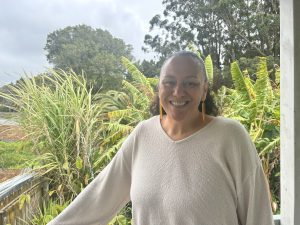
I was born and raised in Kaitaia, and I went away for a little bit and then I came back again when I had my first son, but most of my life this has been home. I went to Kaitaia Primary School, Kaitaia Intermediate & Kaitaia College. There’s quite a big age difference between my older siblings and me and my two younger brothers. By the time we hit teenage years, most of my older siblings had left home, so it was kind of just us. What I do remember about growing up was that there was always people at our house and always things to do. There was never a moment when you sat down and did nothing – always dishes to do, wood to chop, laundry to get in. All of that kept our home rolling and a routine happening.
My older sisters loved sport, and they were the ones who introduced me to it. They would often take me to netball because Mum was busy, and that was my first experience of that world. It wasn’t necessarily a specific moment of realisation that this was my passion, but the overall experience of actually being good at something, enjoying it and getting out of the house. My sisters would play in the adult competition and I’d be in the juniors, and by the time my game finished, I’d just stay around and watch them. So I had that mentorship of looking up to people and going ‘I want to be like them’. I stayed consistent with netball through my younger years, teenage years and into adulthood. Especially as a teenager it was my time to go out, meet new people, and do stuff away from home. The more I participated, the more skills I learned, the better I got, the more opportunities there were. Not once did I waver from wanting to play sport.
Even when my knee took me out of playing, I found ways to stay involved through coaching, umpiring and administration. Now with my new knee I got earlier this year, I’m still finding ways – ‘two-step tennis’ is my new thing, and bowls too! It really doesn’t matter what it is, for me, it’s about participating – being part of a team, being challenged, being active. Otherwise I go a bit stir crazy.
There’s a big link between being in a big family and being in a sports team. You can’t really be an individual when you’ve got nine brothers and sisters, because you’re all connected in some way. One of the main things my parents taught us is that family is everything. You need to support one another to keep the cogs turning. When I got older and started sports coaching, that’s the kind of stuff you had to teach the team too.
Another thing I learned from my parents was integrity and honesty. You can’t get away with much when you have nine siblings – someone will catch you out if you’re doing something you shouldn’t! I learned to respect my parents not just because of how hard they worked for us, but because they walked the talk when it came to those values, and I carried that into being a mum. I couldn’t expect my children to respect me if I wasn’t able to show them why I was worthy of being respected, just like my parents did for me.
I really do have my dream job. I work for Sport Northland, helping communities achieve their sport, recreation, health and wellbeing goals. I’m based in Ahipara, and we’ve managed to help get awesome things off the ground like the pump track and a new playground. I’m also the president of Te Rarawa Rugby Club, and our role there is making the space available for community, beyond the scope of rugby too. Aside from the Marae, it’s the only place that can host big events or gatherings, and our community needs that. I am so lucky to do this work in & outside of my role, and I believe it’s these sorts of things that help grow a community and make it more resilient.
Before Sport Northland, I worked at Kaitaia College as the Sports Coordinator. I loved that job. The difference you’d notice in kids who may have felt rubbish at English or Maths, but really thrived in sport, was amazing.
When you allowed them that space to flourish, it was the coolest experience watching them grow. Those so-called ‘naughty’ kids would be on their best behaviour for me on sports trips because what they were doing meant something to them. They learned responsibility, teamwork, problem solving, emotional regulation – skills they could apply to their lives. That’s why I believe sport shouldn’t just be considered ‘extra-curricular’, it should be a core component of education.
Sports really is a tool for helping to grow great people, at any age. All my kids had to play sport – I didn’t care what kind, they just had to pick something. My eldest son now does jujitsu, my daughter plays everything, and my youngest is in the UK playing rugby. Being active in life really is so important for so many reasons and I always encourage people to try and find their thing that they love. What you did as a 10-year-old may be different from what you do as a 50-year-old but as long as you’re doing something that keeps you moving, healthy and out of trouble, that’s the main thing.
Becoming a mum at 22 taught me that you grow up quickly when you’re responsible for someone else. I was lucky to have my parents’ guidance – I moved back home with them, and they taught me how to care for a child. Later, when I had my other two children, even when we didn’t live close, they still found their way back to Nana and Poppa. Parenting changes as you go – by the time I had my youngest, my eldest thought I’d gone soft, but really, I’d just learned to do things easier. Having my own grandchildren has been a great experience. My son thinks I spoil them too, but I tell him I’m spoiling them with time and attention. Those moments are really important – that’s my job as a grandparent, to give them pearls of wisdom and spend time with them.
Over the years I’ve always needed an escape from a busy lifestyle, and that’s my home. I talk to people all day, every day, so when I get home I just like to be a hermit in my house or yard and enjoy the quiet. You really have to learn to say no to people sometimes. If you can’t unwind, if you can’t recharge, you’ll burn yourself out – you’re no good to anyone if that happens.”
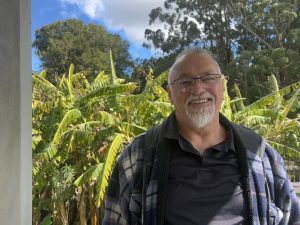
My journey into social services started after I had an accident at work in my twenties. I was off for six months with a wrist injury, and I thought, well, I may as well learn to push the pen. I enrolled to study counselling and social services at Te Whiuwhiu o Hau, through Wintec. ACC supported me in the first year, then I lived on student allowance and part-time work in the second year.
One of my study placements was at Man Alive, helping men with anger management. I loved it. I learned the admin, became a facilitator, and ran groups. My other placement was at Te Whare Ruruhau o Meri in Auckland. That was the beginning of it all. From there, my first job was at Waipareira Trust as an addictions counsellor. My end goal was always to get my tohu and move up North to support whānau. I whakapapa to Ngawha, and I wanted to come home. My brother said, ‘Come work at the prison with me,’ but that was his path, not mine, and he was awesome at what he did. I looked around and got a job at OT in Kaitaia, facilitating family hui. Not long after, I was recruited by the DHB into youth mental health and addictions at Te Roopu Kimiora. I worked there for ten years with rangatahi struggling with suicidal ideation, self-harm, and addiction.
At one stage, I had 54 people on my caseload & I completely burnt out. My doctor told me to leave the job, so I went on the sickness benefit for six months to recover. Later, I started at Salvation Army Bridge as a Pou Whānau Connector in meth harm reduction. I worked there for five years until I took early retirement a month ago. I get my pension in ten days’ time and I definitely feel ready to retire. I’ve worked or studied my entire life, and I’m ready for doing the things I want to do... like putting the new shocks on my truck that I bought 6 weeks ago!
One of the biggest things that stood out to me working in child and adolescent mental health, was how different it was from adult services.
With adults, it was often assess the client, prescribe medication, and send them on their way. With rangatahi, we made sure all their spaces were safe — school, home, family — so they felt comfortable enough to reach out. You can give an adolescent six sessions of CBT and that equips them with tools for life. Adults are too often left with just medication. That’s why so many working in mental health burn out. The government doesn’t put enough into our health system, especially mental health. It’s always a band aid solution, never a holistic healing approach.
Support for the workers in mental health makes or breaks the job. At Waipareira we were given gym and swimming memberships to destress, even if we had to do that during work hours. At Te Roopu Kimiora, I had a boss with a big heart who supported us really well. That kind of awhi in those working environments keeps people going.
Over my career I’ve seen the power of listening. Often, people already hold the answers — they just need guidance. Too many are pushed through a system that ticks boxes and puts plasters on problems.
I helped bring the Man Alive programme up here to the Far North and we ran it for three years. I eventually had to step out of it as I had taken my brother’s mokopuna into my care at ages 2 and 4, so alongside that and my full-time job, something had to give. The programme was about teaching men about the seven forms of abuse. That programme not only changed lives, it changed mine. When I first did the Man Alive programme as a student, I realised that although I never hit my kids, my words were abusive. My language hurt them. The night I had that revelation, I apologised to my children who were 16 and 18 at the time. They said “No Dad, you haven’t abused us”, but I wanted them to understand the ways that I had and that it wasn’t okay. From that moment, my relationship with them changed completely.
People sometimes say I’m gentle, or I let people walk over me. It’s not that — I still get frustrated, but I’ve learned anger doesn’t help any situation. People have a right to say what they want; I have a right to put up a boundary and walk away. Everyone has that right. I taught my clients the same. I’d ask them ‘Is it something you can control?’, if the answer was no, then walk away. Sometimes even just taking a 15-minute break can stop a conflict from blowing up. Those tools, and things like Cognitive Behavioural Therapy, should be taught in schools from Year 7 — I think it would transform our mental health system.
I see myself as the lone pou in my whānau sometimes — both my brothers have passed, one in 2014 and one in 2023, although my three sisters are still here, young and grey. I had a bit of a mental battle when my brothers passed away because I thought I’d die before 50, but I’m 65 now, still here and they’re not sadly. I keep them close to my heart and my mind and know that I’ll see them again one day. Someone once told me a few years ago that I’ll live to 104, so that’s what I’m going to do. My wife jokes that she’ll be there to change my nappies.
When my brother Paul died of a heart attack in 2014, I had my own heart attack two months later. I felt this heavy pressure on my chest one morning when I got to work, so I went to the hospital to get it checked out; next thing I was flown to Auckland for a stent. Every two years I have go back for testing. Those moments remind you how precious life is.
Now that I’ve retired, I’m finding lots to keep me busy – home projects, whānau, marae visits. Part of my retirement plan is to spend more time at the marae and immerse myself in te reo. I’ve studied bits for years, but it’s never really stuck. I see myself as 100% Māori, but I still don’t feel complete without the reo. That’s something I want to focus on now. I’m grateful for my career, for the people I’ve walked alongside, and for the lessons I’ve learned. I’ve learned everything always comes back to whānau & caring for each other. Most people just need somebody to listen to them.”
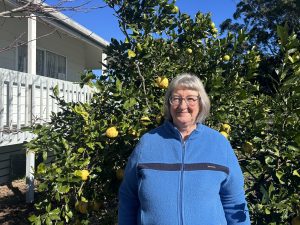
I grew up in New Zealand until I was 15. I was born in Taumarunui and lived just outside of Rātāhi – a tiny place to begin with. We left for Auckland when I was six, but the country had worked its way into my psyche, my heart. So I've always lived outside whatever towns I've been in. My dad was Canadian, my mum was Kiwi, and so when I was 15 they decided we’d go back to Canada, so we immigrated.
I started my university studies in Canada, but I just wanted to come home. I came back to finish my BA at Auckland, returned to Canada for more study, then came back again for my Master’s. New Zealand was very much home. Canada is a lovely place, but it just never became home.
But I wanted to teach at university, and for that I needed a PhD. At the time, New Zealand wasn’t hiring its own PhDs — you had to go away first. So I went back to Canada and did my PhD in Toronto — Canada’s biggest city. Moving from a country of three million to a city of three million was a bit of a culture shock. By the time I finished, New Zealand had started hiring its own PhDs, so I couldn’t get back — there were no jobs. So I stayed. I ended up with a permanent teaching job in a nice, smallish town & built a life there. I taught at that university for 34 years. I loved my students and my job — except the marking!
In 2020, I was on holiday from Canada — my first time home to New Zealand in 30 years. I was supposed to be here for six weeks, traveling from Kaitaia down to Christchurch. I was in Christchurch when COVID lockdown hit – five days from flying out, with nowhere to go. So I called my close friends in Kaitaia. I said, “I have nowhere to go & we don’t know how long this lockdown is going to last.” They said, “Absolutely, come on home.”
After lockdown, I tried to leave back to Canada four times. Every time I booked a flight, it was cancelled. Meanwhile, I was still teaching at the university.
I was teaching courses online from here, getting up at 5am for my 10am Canadian classes, working 100-hour weeks, it was exhausting. And I thought: I can’t do another year of this. I was past retirement age anyway. So, I retired and stayed in the Far North. But I’m not someone who sits at home playing bridge. I still wanted to be useful. A friend told me to check out Eco Centre. I walked in on a day when Jo Shanks was there and said, “I’d like to volunteer.” She said, “We don’t want you here… we want you in the garden!” I didn’t even know there was a community garden! I started volunteering and became garden coordinator a year later – four years on, I’m still here.
I’ve always grown kai. I had a lifestyle block with various farm animals, a half-acre organic market garden and a one-acre organic food forest in Canada for over 20 years. I did that partly because I’d started researching in the 90s what was going on with the climate. It was already not looking good. So, it was very important to me to be able to provide sustainably grown kai for people that I cared about and myself, and also to make good kai available. But gardening here in Te Hiku was a steep learning curve — different soils, subtropical climate, no snow, no frost to kill off pests. How to work with the land has been one of my biggest lessons. I work through my company, the Edible Lawn Project, helping people put kai onto their lawns—whether it’s bushes, vines, trees, fruit trees or veggie gardens or a combination.
We can grow good kai year-round in the Far North and if everybody had the skills, they wouldn’t go hungry. I now run free gardening courses through Far North REAP. Some of the things I teach include no-dig gardening, how to develop food forests & even mobile gardening for people who don’t have large spaces to work from. We also teach pruning workshops, seasonal garden planning through Eco Centre, and community gardening at the Mārā of course.
I meet a lot of people who think gardening is too hard. But it doesn’t have to be. We’ve moved past the old methods that required double-digging and breaking your back.
I teach people how to garden in ways that are sustainable, low time, low cost, and low effort. It is essential for both our health and the health of the soil, the water and the air that we grow without chemicals, and learning how to do this with maximum productivity is important. If you mow your lawn, you have time to garden. Once your garden’s established, you won’t spend more time on it than you do mowing. That’s something people don’t realise.
If you’re renting, grow in pots, fish bins, or buckets. Drill some holes, get $2.39 pots from Mitre 10, and you’re away. One pot can grow tomatoes, herbs, whatever you like. Hügelkultur is also amazing for small spaces — it’s three-dimensional gardening, and kids love it. Pile up wood, cover it with soil, and plant into it. Incredibly productive. A great way to use slash wood from paddocks.
And fruit trees? Once you stake them and protect them for a couple summers, they need barely any care. The fruit just comes. If you planted an orange tree five years ago, you’d be eating oranges now. I always say to people: get growing. Find someone to teach you. Come to the Mārā. Come to Far North REAP. Go to Eco Centre. Get the kids involved. Share land with your neighbours. If you’ve got the land and someone else has the skills, team up. Share the mahi. Share the kai!
I would tell my younger self to hang in there, because you're going to learn a lot in your life, you know, in the good times and the bad times. And sometimes the bad times can seem very overwhelming but they shape who you become. So, hang in there because this is part of you growing. Another thing I’d tell myself is to build community. More than anything, build community. Everywhere you go. That’s the key to surviving whatever life may throw at you. Because no matter how much money you have, you won’t do as well alone as a group of less-resourced people working together. You’ll always have something to learn. Someone up here will know how to grow watercress — I don’t yet! So I need to keep learning too. Just don’t give up. Don’t think you’re too old, too busy, or too inexperienced. If you’ve got time to mow, you’ve got time to grow.
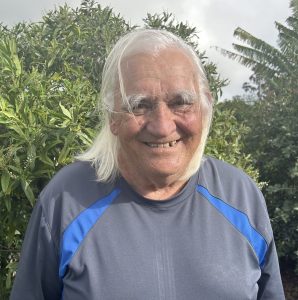
“I often think this, holidays at our bach up 90 Mile Beach, stuck in behind the dunes, when I was 6-7-8, my mum & sisters and I would go there probably every May school holidays while the cows were out, are some of just the best memories of my life. We lived off the beach pretty much, the sound of surf – I love that so much – it's such a strong memory for me. I loved the freedom at the beach, to do what you like. I’d be out the door by daylight, my only instruction from Mum to be home by dark. No parent would do that these days. I remember reading to mum, reading was a big part of my life, and I would listen to the weather. The bad weather was almost better than the good weather because you could light the fire and listen to the wind and rain on the roof.
I was originally going to be a schoolteacher, but I dropped out of university and came home, went to social welfare because I couldn’t find a job. I was told to go away when I wanted to go on the dole, so I found a job cutting scrub under telephone lines, and then the day I turned 20 I got a job as a barman at the hotel but that was cramping my social life so I got a job at the substation in Pamapuria. When that job finished, I got a job from a friend who was 2IC at Aupōuri Forest, I was absolutely useless at it but I stuck at it. 90% of the guys I worked with were Māori which was good for me because I was in the minority, which I had never been before.
One day when I was married, and we had our first child, I did a correspondence course in journalism because I did not want to spend the rest of my life pruning trees, and offered myself to the Advocate but they didn’t give me a job and then one day I got a call from the Age and I got a job. That was the beginning of 44 years at the Age.
One of my most memorable experiences during my career that truly impacted my world view was in the 90s when the government was going to downgrade the hospital to a super clinic. That went on for 7 years... one year, there was a march for the hospital. It started outside the Age office, it went right up to the hospital, full width of the street... Some reckon there was 20,000 people that day, who knows.
But they came from all over, right out from the Hokianga, busloads of them! And there were patched gang members linking arms with businesspeople and little old ladies, everyone was totally united.
That was the real Far North... A lot of people were in tears. It was an amazing display of solidarity, I had never seen anything like it before, and I don’t know if we ever will again. That changed the way I thought about this community. It's the first time I remember thinking 'very few people are all good, and even fewer people are all bad.' Everyone had a mix – everyone has something to offer. That was sort of a light bulb moment for me.
I’ve never knocked on doors after death in my career... I realised because I value people more than the story. I knew I wouldn’t get a positive reaction in door-knocking in a sensitive situation and upsetting them really wasn’t worth getting more readers of the Age.
Early on in my career, I realised I had to let people decide that they can trust you... Trust is so very important, and I would never, ever do anything to put that trust into any kind of question. If something was off the record – it was never published by me. Even if it was a really great story, I wouldn’t jeopardize the trust by doing anything with it. Accuracy was also a big part of gaining trust, as well as treating an individual with respect and giving everyone a fair go. My philosophy was always to give someone a fair go. If someone wrote to the paper with an opposing opinion to my own, I would still publish it – why wouldn’t I? I don’t think I would’ve gotten very far otherwise.
The biggest hurdle I had initially... I was reporting in this community where I have lived all my life and I’m related to a lot of people – where a lot of people I was writing about somewhat negatively were friends or people I knew... That emphasised to me the importance of accuracy and respect. Although it was tough, a lot of people ended up taking it on the chin.
My biggest achievement in life is my kids and grandkids, who are all growing into good, normal people.
Other than that, I was made a member of the New Zealand Order of Merit some years ago, that was special because it came from people who know me.
One year, we had a gentleman working on advertising for the Age who went up and down the main streets of Kaitaia asking people what they thought of the local paper... the main feedback that came back was that the paper was credible. That also meant a great deal to me.
There’s always been critics and there always will be, and bless them, because you need them – you seriously do. I’d do something I thought would be brilliant and I’d get completely slandered for it. It was definitely what kept me grounded.
This really is a fantastic community – some extraordinary people and so many of them just fly under the radar. It just about brings me to tears when I think about the division happening across our country, and I hope it stops soon.
Nowadays, I spend a lot more time tending to my roses and they are looking better than ever because they’re getting a lot of attention... I’ve slowed down a bit and am enjoying having more time.
A part of my daily routine is still reading the rainfall. It’s something that funnily enough I have done every day since I was asked to on 6 May 1977 at the Age. When I walked into my office that morning, I was told that I needed to read the rain gauge every morning... I’ve continued that habit, still collecting the rainfall every morning, simply out of curiosity and habit I guess.
I am relatively happy with the legacy of being the former editor of the Northland Age, but I guess more than anything I just hope I will one day be remembered as someone who really values this community and always did what I thought was the best for it.
There are things I’ve realised since I’ve come into retirement that I didn’t have the time to even consider before. If I could go back, I would tell my younger self that you don’t stay young forever, and the things you do now are almost certainly going to have an impact on you later in life... Take your time to smell the roses.”
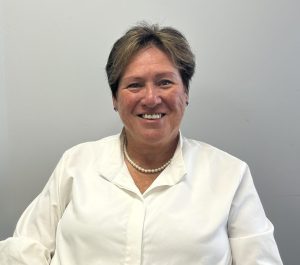
“I grew up in a farming community, back when neighbourhoods had neighbours who cared and children could run freely, it was overall a very happy time. All the neighbours would look out for one another’s children in their own way. I didn’t grow up with the word ‘safe’, it wasn’t even a question that you were safe – that was already implied in the community I was raised in, I was really lucky. My mum was always heavily involved in community things, she had a servitude nature, and I got to experience our Marae at a really young age. The lifestyle, and the kinship and the connectedness of all of that, with many aunties and uncles.
My grandmother was the most influential person in my childhood, as well as my mother. My grandmother had a big part in my upbringing, her house was only 100 metres across the paddock, and it was always my job to make sure she had milk in the morning. As I grew older, I would hang out there more and more, and then I got to the age when my parents said it was okay for me to live with her, so I did. We had a special bond her and I.
My mum was a marvel to be reckoned with in our lives, and looking back, my dad was a really cool character, very hard worker. My mum would always be doing things in the community. If there was a fundraiser, if the school needed something, or if her kids needed something, she was there. My dad was very outdoorsy, he was the kai moana gatherer and would always have my brother and I outdoors doing crazy things, like my brother driving a bulldozer up a steep hill at intermediate age, while I’d be following behind with a flame thrower strapped to my back burning off parts of the ngahere [forest]. We were having the time of our life while our poor mum was probably ageing terribly cause her face had “worry” written all over her face whereas I was “woohoo”!
I did my overseas trips - worked overseas for a few years, got to spend time in Turkey on a Rotary International scheme but Te Hiku is always home. I have so much pride and joy for this area. I was the best bar maid in Australia for a while, and I came back to Te Hiku when my dad passed away. A lot of things in my life would not have happened the way they did if my dad had not passed away when he did, I probably would still be living overseas today. When I was home, I needed coin in my pocket, so a friend said to me, ‘why don’t you apply for a job at Aupouri Ngati Kahu Te Rarawa Trust?’. Honestly, back then, I couldn’t get the first word out of my mouth let alone the rest, at the time it was probably the longest Māori word I’d ever heard in my life. So I was super nervous to get an interview with an organisation where I couldn’t say their organisation’s name.
I went for the interview and was asked if I knew how to turn a computer on, and off again. Laughing to myself and a bit cocky I said yes, yes I do. So I got the job, but fell off my chair when I was told I was a computer tutor teaching women office things. I knew nothing about computers or running an office! Like nothing. Geez, I was reading heaps and prepping tutorials the night before, for months until I finally fessed up. The women I was teaching all had black sunglasses on, black leathers, black jeans – they were pretty staunch women, and I later figured out that many had partners in the Black Power. They absolutely blew me away and I learnt so much from them. Together we set the bar for success and we just kept going. Every day, they showed up, dressed to succeed, ready to empower themselves. They all went through the New Zealand Institute of Management Supervisory Certificate and succeeded. That was a really incredible thing to be a part of. I was proud then and I am proud now to have shared that journey with them.
They were on the court and playing the game of life, marvellous role models to their kids – they weren’t in the grandstand watching life go past them. That period and their success made me realise that everything in life is possible.
These last few years I’ve been thinking about how history will record me – am I sitting in the grandstand or am I on the court and playing the game? I want history to record me as playing the game. If you sit in the grandstand, there’s no effort, no trial, no commitment, no nothing – you’re just an observer. To get on the court and play the game is hard work. You’re going to be unpopular at times and fall over, question yourself, and do dumb things but ya get up again when you are on the court - cos change doesn’t happen from the grandstand, it happens on the court. I’m a glass half full person and Te Hiku is home and we deserve the best. Everything is possible! End of story.
If I could go back and talk to myself 30 years ago, I would tell myself to stay on course to learn my Reo. I did Te Reo in school right until fifth form, when the school just pulled the class and closed it down. My teacher said to us, ‘it’s not going to help you in life, so put it as far from your thoughts as you can and go choose another subject’. So, I did just that, I switched that part of my life off for a very, very long time, and I wish I hadn’t. I wish I had carried on for myself, it is my culture. I didn’t reconnect until I returned home to New Zealand and saw myself staring at the longest Māori words I'd ever seen (Aupouri Ngatikahu Te Rarawa Trust). Funny thinking about that now – ain’t life full of surprises, it rolls off my tongue these days.
It is not our past that creates our future, it is your words, in the here and the now.”
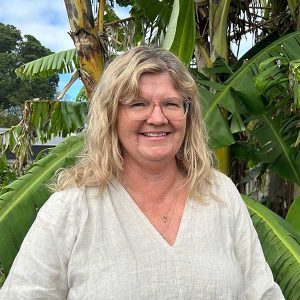
My parents came from Auckland and lived here for 50-something years. They never called themselves locals, but always said their children would be, as we were born and raised here, so this is and always will be home for me.
My earliest memory is paired with my mum’s retelling of it; she used to take me to Awanui School [where she taught for many years] with her, right from when I was 10 weeks old. Although I don’t remember that early on, I remember being around 4 years old and being led through the playground by other school kids, I have many happy memories there.
I always had a lot of fun throughout my childhood and teen years, growing up in Kaitāia, I was very lucky. My best friends today are still the girls who were my neighbours on Matthews Ave growing up. My biggest pride is my family unit - my husband and my children. They’re just good people, you know? They care about the world and people and family. And that’s all that matters to me. We may not be perfect, but we always try to do our best. I can look at my family with much pride.
I’ve always been passionate about the work I do in Human Resources and Compliance. One of my best bosses and mentors, Trevor Gray, put me onto the journey of HR which I’m really grateful for. Another great boss, Tunney McFadyen told me I should work for myself, but I wasn’t brave enough to take the leap. I was scared! You see, I’m not a risk-taker. But as I’ve gotten older, I’ve realised that it’s those risks that bring about the change you need in your life. If something compromises my ethics or integrity, or the environment I’m in doesn’t honour human rights and partnerships, I won’t hesitate to speak up or remove myself from that environment. That’s something I’d tell my younger self. If your beliefs aren’t being respected, walk away. Someone else, somewhere else, will appreciate you for who you are. I work for myself now, and I love it, and I treasure the relationships I’ve made along the way.
In the future I want to travel more; whether it’s travelling locally or internationally, I think travel opens your eyes in ways nothing else can. You meet new people, experience new cultures, and learn more about yourself and the world. I remember the first time I was invited to a national REAP conference and I missed out because I was afraid to fly. For years, I made excuses. But once I faced that fear, I never looked back – I would be first on the list for all future conferences! I believe life isn’t about the things that you have, but the experiences you get to live. I used to always drag my kids along to community events because I wanted them to experience things, it’s really important.
The most pivotal moment of my life came when I lost my dad and followed by my sister, Kim. Who even was I before that happened? I don’t remember. Loss changes you in a way that I can’t fully describe. It really changed the way I view life, and I’m always learning this and being reminded of it – but you really, genuinely try to stop sweating the small stuff. It just doesn’t matter anymore. There is no point. When you watch someone like my sister who wanted to live, would’ve given anything to live, who had four children and three grandchildren at 49 years old, and through no fault of her own got cancer and pass away. It really changes how you see things. I got stuck in the angry phase of grief for a long time, and it wasn’t until I did grief counselling that I was able to come out of that, I couldn’t recommend getting that external help enough.
There was so much going on around the time that my sister got diagnosed. My dad had passed away, my mum had already been diagnosed, and then my brother was diagnosed five months after Kim was. Kim passed in September of 2012, and then two months later my husband had to have life-saving open-heart surgery, and I was suddenly back in the hospital that my sister died in. It was a tough time.
It feels like a really depressing part of my story but it’s real – people don’t often talk about this kind of stuff because it feels awkward or bizarre, but it’s the truth. Once I passed the angry stage, humour is what got me through, maybe a bit of a warped sense of humour. Because if you don’t laugh, you pretty much would cry all the time and you know those that have passed on wouldn’t want you to be doing that.
I live knowing that life is so precious, and it’s too short to sweat the small stuff. My children are like that too; they appreciate sunsets and sunrises, the moon and the stars and the rainbows – all the things that are bigger than us that bring joy. I love that.
I’m so lucky that I have so many people in my life who are influential to me – my late sister, my Mum & Dad, my brother, my dear friends, my Matthews Ave girls that I grew up with, oh and my husband and my two children – I’m learning from them every second.
My mum used to say, “Will this matter in a year’s time?”, sometimes things feel really, really huge but if you stop, and think, is this going to still be important in a year’s time? It helps to put things into perspective. Above all, I just want people to always be kind. You never know what someone is going through.
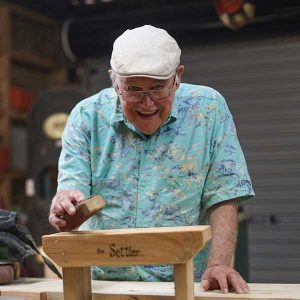
For my 10th birthday, during the end of the Second World War, in 1945, my mother asked me what I wanted for my birthday cake and I said a battleship. So she made me just that. She asked if I wanted a birthday party, and I said oh yes. For the birthday party, she took me up to just below the airport where there was a lovely grove of taraire trees. We played cops and robbers, tag, and all the rest of it on the crunchy leaves. I remember it so vividly.
During the war, when NZ was under threat from the Japanese, because our school [Oturu Primary] was very close to some military installations, we had a practice every week to keep ourselves safe in the event of an invasion. When the teacher said ‘run,’ we had to run and get into a six-foot deep slip trench, and you had to run fast. That was scary stuff. I can still remember the smell of the damp soil, and the teacher would leave us there for 10 or 15 minutes. It was a very different time.
I had a very happy childhood. Most days were very enjoyable. I had very good parents. My mother had the biggest influence on me when I was younger. She was an ex-matron from Waiuku Hospital but had to give up her career when she married my father, who was a widower. She had more energy than my father, who I guess had already had his first family and perhaps wasn’t as interested in the second edition. A loving, caring, and charitable person my mother was. She taught my brother and me lots of domestic skills—cooking, ironing, and cleaning. She certainly taught me a love of books and reading, which went on to be very important in my life. Being charitable, I think, was one of the best things I learned from her. She was always inclined to help others, and I think a bit of that rubbed off on me.
I’d say to young me, go back to the start because it’s going to happen so rapidly in front of you. I’d also say travel isn’t the only way to garner your understanding of the world. Knowing your neighbours is just as important. Get to know the world around you. We had a rich community back then; people shared and cared, and everyone was interwoven. I think it is important to continue your relationship with your community. Don’t forget those friends you had in the beginning, keep with them. Keep your relationships going, they’re very important. It's something I wish I did more of.
I wouldn’t call myself a passionate person, but a person that maintains a compendium of interests. The things that I most enjoy in life are human connections, having people around to meet and greet and talk to and entertain. The real stuff in life is in amongst the interactions with people.
My wife and I bought this bit of dirt in 1972 and turned a whole lot of gorse into a farm. My wife and I made a bloody good team and had a wonderful marriage. It’s almost five years since she passed now. I saw some past students the other day who told me Mrs. Shepherd was the best teacher they ever had. I said they were indeed lucky because she was a very good teacher. But she was also a wonderful mother and a great wife as well. I regret very much that we’ve had five years without her because we would’ve had a pretty good five years, I think. I doubt time will ever change that feeling.
Community development has always been something I’m committed to and interested in. The coalition of cooperative people on a committee or a board has always fascinated me—how the dynamics work and how decisions end up being made. I’ve spent half my life on committees, most of which have been for the benefit of the community, like one that resulted in the building of Te Ahu Centre.
In life, you get dealt cards that you’re not able to control the dealing of. I ended up in the army as a 21-year-old, and the rest of my mates were 18. When that happens, you end up as a leader by default because of your age. So I ended up going up in the ranks quite early on. Because of three men who drowned that were my neighbours, subsequent events meant that event changed my whole life because I most likely would’ve stayed there in Te Rawhiti for a few more years.
In my lifetime, I am most proud of the fact that I survived. There are a couple of times that I should have died. I should have had heart attacks and other things, but I survived because of good medical attention. I had a very supportive family and wife, and the right doctors and medical care at the time.
I think the special feeling that the Far North provides is very hard to put into words. Every single day, there’s something that makes me say, ‘Well, isn’t that lovely.’ There are always beautiful scenes to see, whether it’s rural or coastal. It’s a lovely, pumping little town, there always seems to be something happening around the edges.
I want to be remembered for being a good cook. I’ve preserved 154 jars of local produce this year so far. People can remember somebody else for the strangest reasons, maybe that will be mine.
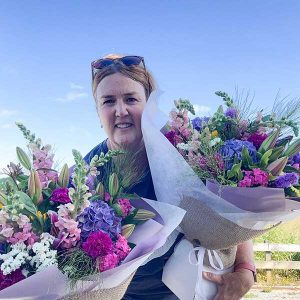
A defining moment in my life that I often look back on is when we decided to make Kaitāia our home. My husband is born and bred in the far north, in Houhora. We met in the south of France, and after that, I moved from a small South Taranaki settlement called Hāwera—a place I’ll always call home, full of fond memories—to a small town I knew nothing about. It was a huge change for me.
I’d never been North of Auckland, and suddenly, I’m here, running a business, raising two boys with my husband, and making connections with some of the most incredible people I’ve ever met.
It wasn’t just a move; it was a life shift, and it’s been one of the best decisions I’ve ever made. Most people don’t know this, but before I became a florist, I was a chef for 13 years. I loved the energy of a kitchen, the hustle, the bustle, and of course, the food and the joy it brings people. I spent a lot of time traveling the world, working in different places, but when I moved here, I knew it was time for something new.
Floristry found me, and I’ve never looked back. That journey from chef to florist was life-changing, and I wouldn’t be who I am today without those years of learning and growing. I always tell people the best piece of advice I’ve ever received is to "never forget why you started" and "only look back to see how far you’ve come.
It’s so easy to get caught up in the hustle of life and business, but remembering that spark—the reason you first began something—keeps you grounded. And for me, that spark is the joy of meeting new people and helping them celebrate life’s special moments, whether it’s a wedding, a funeral, or simply brightening someone’s day with a bunch of flowers. That’s what keeps me going. That, and my ever-supportive family.
I’m really proud of the community here in Kaitaia. I’ve been lucky to meet so many inspirational people through my work as a florist, and I have to say, the support I’ve received from this town has been amazing. The people here—whether they’re customers, suppliers, or my fellow volunteers at the Kaitāia fire brigade—are what make this place so special. I’d even say I could think of 50 people before myself who should be featured in this piece! It’s an honour to serve and be a part of this community, and every day I’m grateful for the relationships I’ve built over the past 14 years.
I’m so proud to call this place home.