
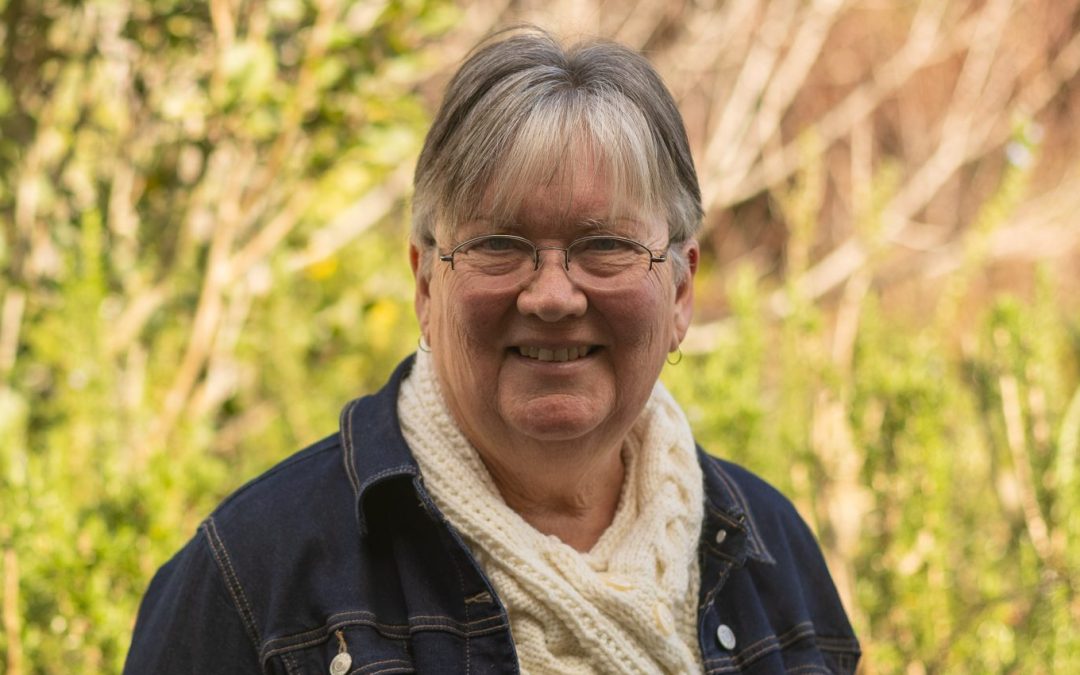
“Our family lived in Howick, Auckland until I was about five and a half years old, when Dad’s work with Civil Aviation took us to Mount Maunganui. He worked at the aerodrome, and I absolutely loved growing up there. It was very different from today – there was so much freedom and space. We roamed freely around the aerodrome and played in an old Second World War hangar among Tiger Moth aircraft. There was even a pond used for firefighting where we sometimes swam. I remember taking my pet duck down for a swim. Those are some of my happiest childhood memories.
My mum’s parents lived in Kaitaia, and after about six years at the Mount, and a year in Whangārei, we moved north to be closer to them. I was quite disappointed because I was leaving special friends behind and, being in Form 1, I thought I had a good chance of becoming a prefect at Omanu School the following year. My parents softened the blow by promising that if we moved to Kaitaia, I could have the horse I had always dreamed of owning.
Eventually we moved to a farm on California Hill, and the rest of my teenage years were filled with riding adventures all over the district. My brother Andrew and I shared a passion for horses. He pursued riding at the highest level, while I was more of a cowboy rider, happiest exploring the countryside.
At the grand old age of 18 I married my first boyfriend, Paul. We have two children, Michael and Michelle, and settled on our farm at Kaingaroa, where we have now lived for more than 50 years.
I helped Paul on the farm and later returned to work at the National Bank once our children reached intermediate school age.
About 30 years ago I met a man named Sinclair Bobbit, who gave me a photograph of our house with a large group of people standing outside. It showed the wedding of Bill Bobbit and Charlotte Christensen in 1914. I remember looking at those faces and wondering who they all were. I wanted to know their stories, and that single photograph started a journey that has shaped much of my life.
I never intended to become a writer, but once history captures your imagination it never really lets go. Small pieces begin to fit together, revealing stories that are simply too good to leave untold.
I started researching and writing about Kaingaroa, although a few people suggested it was a waste of time, which was disappointing. Instead, I turned my research on the Matthews family into a book for their reunion. That was followed by books about Awanui and Pioneer Dalmatian Settlers of the Far North. The Dalmatian families affectionately call it their “bible” because it contains something about almost every family who settled here. It sold out when first published in 2017, as did later editions, so three years ago I made it freely available online for everyone to enjoy.
My office is my happy place. The walls are covered with old photographs, gum spears and well-used spades, all reminders of the past. Once I settle into my work I lose all sense of time. Lunch might not happen until three or four o’clock and countless cups of tea go cold while I chase another clue or uncover another story.
I don’t write for accolades; I write out of respect for the people who came before us. They deserve to be remembered with dignity. I enjoy bringing their stories back into the public eye, piecing together fragments of history until a fuller picture emerges, and it is incredibly rewarding when those stories resonate with others.
Writing They Shall Not Grow Old was especially moving. It made me appreciate just how fortunate we are because of the sacrifices made by those who served. Many returned home carrying terrible physical and emotional scars, yet they simply got on with life. One man, Harry Lamb, came home with only one arm but still dug gum and developed two farms. I wondered how he managed such an extraordinary achievement.
By the time I finished the book, I felt as though I had a connection with each soldier I had written about. The same is true of the families in Pioneer Dalmatian Settlers of the Far North – they feel like friends I never had the chance to meet. I experience a similar feeling when I visit old cemeteries.
I’m still drawn to this work and can’t imagine stopping. There is always another story waiting to be uncovered, another forgotten life deserving of recognition. Researching local history has changed the way I see the world. When I drive past an old farmhouse, I find myself wondering about the families who lived there a century ago, the lives they built and the challenges they faced.
I love writing about belonging, giving stories back to people who might otherwise become forgotten. And now I’ve come full circle, returning to finish the very first project I ever began – a history of the Kaingaroa district.”